Free TCRN sample questions
Questions from the Trauma Certified Registered Nurse (TCRN) practice bank, with the correct answer and an explanation for each one. No junk, no filler.
Try them in the simulator Same questions, with study, timed and flashcard modes.
Showing 6 of 12 free sample questions.
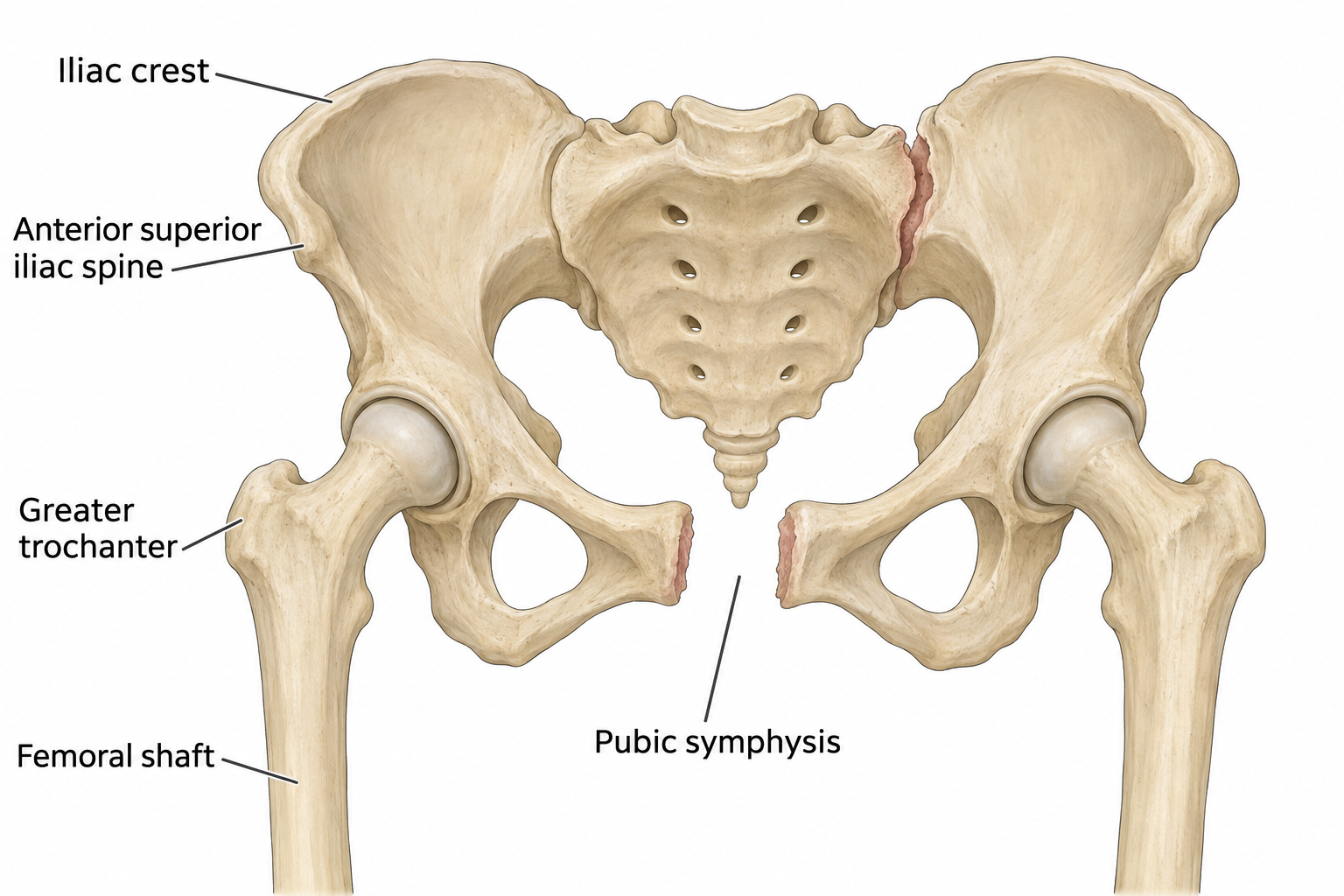
A trauma team prepares to apply a commercial pelvic stabilization binder on an unstable patient with an open-book pelvic fracture. Over which anatomical landmark must the binder be centered circumferentially to effectively reduce pelvic volume?
An unstable pelvic fracture patient is undergoing catheter angiography for ongoing arterial pelvic hemorrhage. Why do trauma clinical practice guidelines specifically recommend selective embolization over nonselective bilateral internal iliac artery embolization whenever technically feasible?
True or False: Patients sustaining high-energy pelvic ring fractures have an elevated risk of venous thromboembolism, with deep vein thrombosis rates reaching up to 34% and pulmonary embolism rates reaching up to 12%, making early pharmacologic thromboprophylaxis essential once hemorrhage is controlled.
A 22-year-old athlete arrives with a closed tibial shaft fracture following a direct collision. Which TWO assessment findings represent the earliest and most reliable clinical indicators of acute compartment syndrome? (Select TWO)
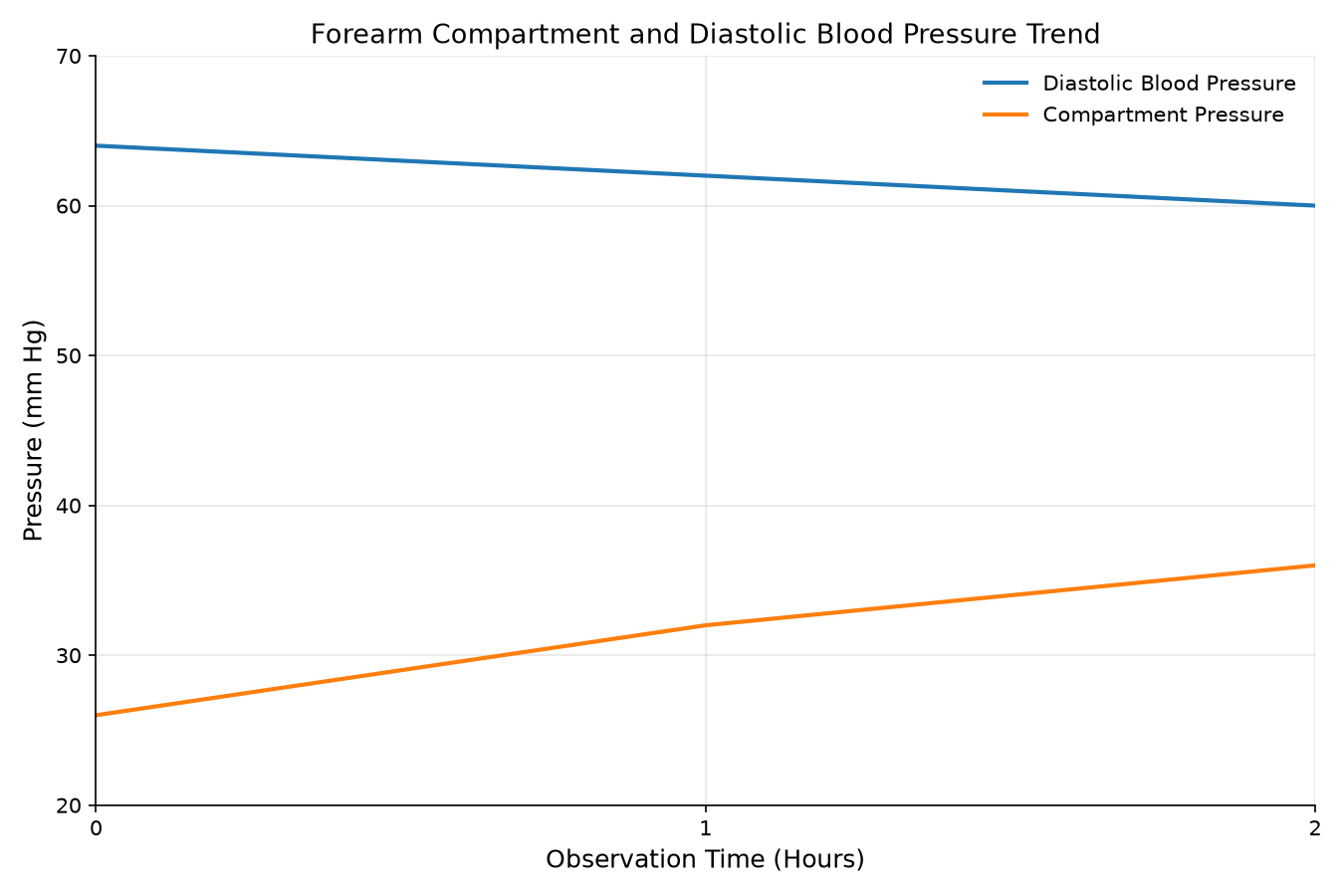
A patient with an obtunded mental status and an immobilized mid-shaft forearm fracture has an intracompartmental pressure monitor in place. The monitor records a compartment pressure of 36 mm Hg. The patient's current non-invasive blood pressure is 102/60 mm Hg (diastolic blood pressure 60 mm Hg). What is the calculated delta pressure (ΔP), and what clinical decision does this support?
6 more free samples are waiting
Create a free account to unlock the whole TCRN sample bank, or get full access to all 161 practice questions in the simulator.