Free CV-BC sample questions
Questions from the Cardiac-Vascular Nursing Certification (CV-BC) practice bank, with the correct answer and an explanation for each one. No junk, no filler.
Try them in the simulator Same questions, with study, timed and flashcard modes.
Showing 6 of 12 free sample questions.
A 62-year-old self-identified Black patient with chronic HFrEF (LVEF 28%) remains symptomatic with NYHA functional class III dyspnea despite optimized target doses of sacubitril/valsartan, carvedilol, spironolactone, and dapagliflozin. Baseline blood pressure is 128/78 mm Hg and estimated GFR is 48 mL/min/1.73 m². Which pharmacologic therapy should the cardiac nurse anticipate adding to the regimen to reduce morbidity and mortality?
A nurse reviews the admission orders for a 56-year-old patient admitted with acute decompensated heart failure and an echocardiogram demonstrating an LVEF of 25%. Which prescribed medication should prompt the nurse to immediately contact the attending provider to question the order?
A patient with non-ST-elevation myocardial infarction (NSTEMI) is scheduled for urgent coronary angiography and percutaneous coronary intervention (PCI). Current clinical revascularization guidelines recommend the transradial approach over the transfemoral approach as a Class 1 recommendation. Which clinical outcome provides the primary evidence supporting this recommendation?
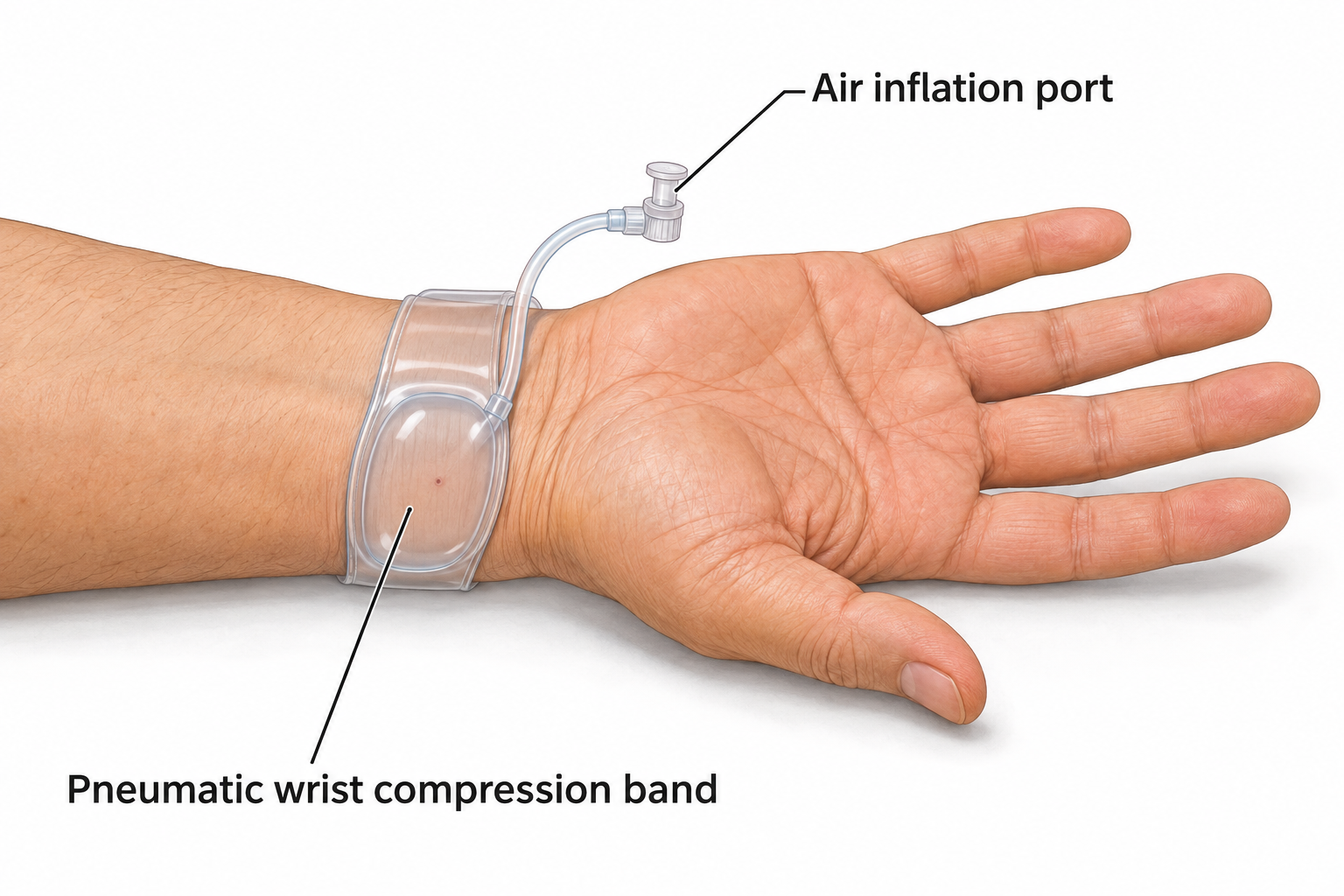
A cardiac nurse is caring for a patient who returned to the cardiac step-down unit 45 minutes ago following successful right transradial percutaneous coronary intervention. A pneumatic radial compression device is secured over the right wrist access site, as shown in the figure. During assessment, the patient reports severe throbbing right hand pain and tingling in the thumb and index finger. The nurse observes that the right fingers are cool to the touch with a capillary refill time of 4.5 seconds and a non-palpable right radial pulse distally. What is the nurse's immediate priority action?
A 58-year-old patient with severe three-vessel coronary artery disease and refractory angina is admitted for elective coronary artery bypass graft (CABG) surgery. The cardiothoracic surgical team plans to utilize the left internal mammary artery (LIMA) along with the non-dominant left radial artery as arterial conduits. Prior to surgery, the patient experiences an episode of rest angina with ischemic ST-segment depression in leads V4–V6, prompting the interventional cardiology fellow to request emergent diagnostic repeat angiography to evaluate acute graftable anatomy. When preparing the patient and coordinating vascular access planning with the catheterization team, which procedural consideration is essential regarding arterial conduit preservation?
6 more free samples are waiting
Create a free account to unlock the whole CV-BC sample bank, or get full access to all 158 practice questions in the simulator.