Free CNM sample questions
Questions from the Certified Nurse-Midwife (CNM) National Certification Examination practice bank, with the correct answer and an explanation for each one. No junk, no filler.
Try them in the simulator Same questions, with study, timed and flashcard modes.
Showing 6 of 12 free sample questions.
When managing a shoulder dystocia where McRoberts maneuver and suprapubic pressure have failed to achieve delivery, the certified nurse-midwife moves to internal maneuvers. The midwife inserts two fingers into the vagina and places digital pressure on the posterior aspect of the anterior fetal shoulder, pushing it toward the fetal chest to adduct the shoulder girdle. Which rotational maneuver is being executed?
True or False: Application of fundal pressure during an active shoulder dystocia is recommended to assist in dislodging the impacted anterior fetal shoulder.
Immediately following spontaneous placental expulsion, a multiparous patient experiences sudden heavy vaginal bleeding. Palpation reveals a soft, boggy uterine fundus situated 2 cm above the umbilicus. While vigorous transabdominal fundal massage is initiated, which medication is universally designated as the first-line pharmacologic agent to control uterine atony? flowchart TD A[Brisk Bleeding & Boggy Uterus] --> B[Fundal Massage & Empty Bladder] B --> C[First-Line Uterotonic: Oxytocin IV/IM] C --> D{Uterus Firm & Bleeding Stopped?} D -->|Yes| E[Continue Maintenance Oxytocin & Monitor] D -->|No| F[Escalate to Second-Line: TXA, Methergine, Carboprost, Misoprostol]
A 34-year-old G4P3 gives birth vaginally to an infant weighing 4,150 grams following a rapid second stage. Ten minutes after delivery of the intact placenta, brisk vaginal hemorrhage occurs. Quantitative blood loss is calculated at 900 mL. Continuous uterine massage and an intravenous infusion of 30 units of oxytocin in 500 mL lactated Ringer's are running. Uterine tone remains soft and uncontracted. Bimanual uterine compression is initiated. Her medical history is notable for chronic essential hypertension managed with labetalol. Her current blood pressure is 168/104 mm Hg, pulse is 108 bpm, and respiratory rate is 18 breaths/min. She has no history of asthma or cardiac disease. Which second-line uterotonic medication is strictly CONTRAINDICATED in this patient?
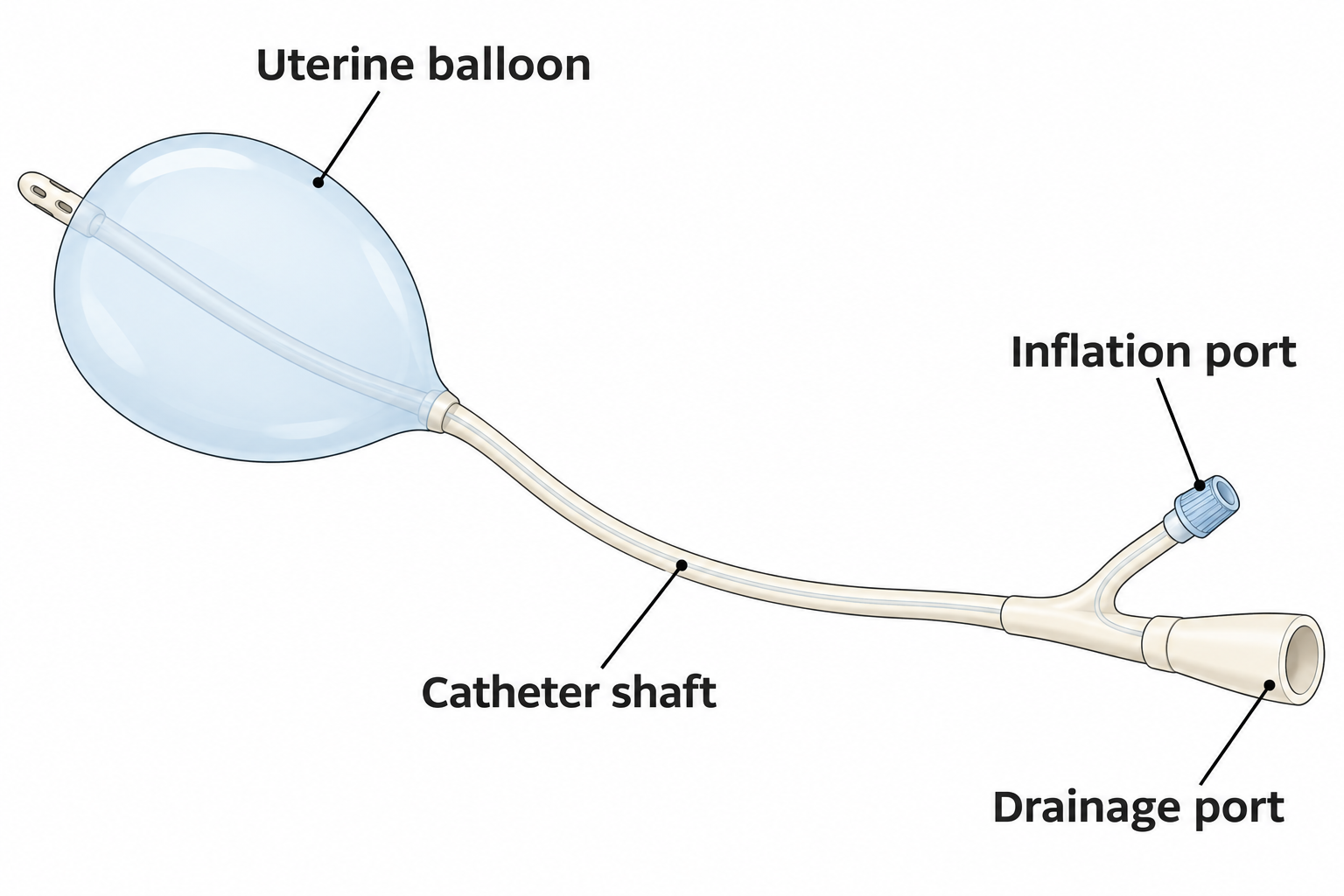
When implementing the WHO first-response care bundle for postpartum hemorrhage refractory to initial fundal massage and oxytocin, what is the recommended time window for administering intravenous tranexamic acid (TXA) to maximize reduction in bleeding-related mortality?
6 more free samples are waiting
Create a free account to unlock the whole CNM sample bank, or get full access to all 168 practice questions in the simulator.